
Lower Trent Conservation is working alongside six neighbouring conservation authorities to ensure a smooth, successful transition to the Eastern Lake Ontario Regional Conservation Authority (ELORCA).
The region brings together communities, landscapes and waterways stretching from the Kawartha Lakes to Brockville. Through this transition, the seven conservation authorities are working collaboratively to bring their local knowledge, scientific expertise and experience together in support of the region and its individual watersheds.
Need a service today?
Local programs and services will continue without interruption through consolidation. Continue to contact Lower Trent Conservation for assistance as you do today.
 Permit Application
 Flood Information
 Conservation Areas
 Outreach and Stewardship
Questions about Lower Trents service?
A region connected by water and landscape
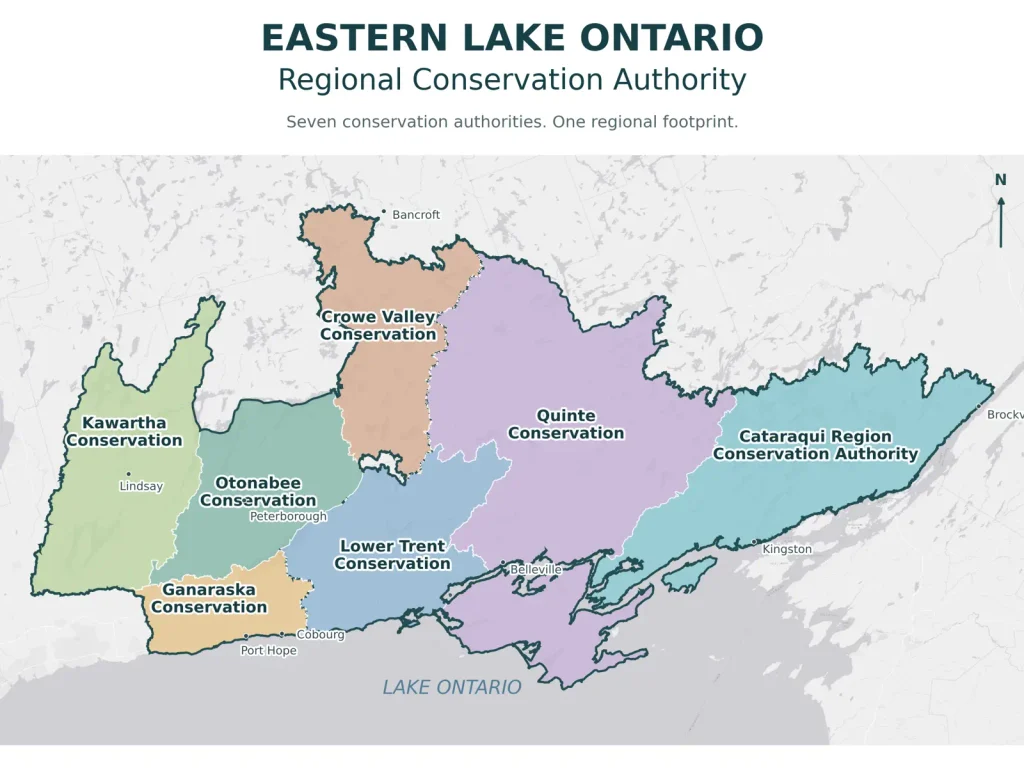
The ELORCA region extends across a diverse landscape, from the Kawartha Lakes through the Peterborough and Trent River areas, along eastern Lake Ontario and the Bay of Quinte, and east through the Cataraqui area toward Brockville.
It brings together inland lakes, rivers, wetlands, forests, farmland, growing communities and shoreline environments. Across this geography, local watershed knowledge will help inform coordinated work at the regional scale.
What is ELORCA?
The Eastern Lake Ontario Regional Conservation Authority (ELORCA) is the regional conservation authority being established through Ontario’s consolidation of conservation authorities. It is the regional authority that will bring together Kawartha, Cataraqui, Crowe Valley, Ganaraska, Lower Trent, Otonabee and Quinte conservation authorities.
Local programs and services will continue, including flood forecasting and warning, permit review, stewardship, watershed monitoring and conservation area management. You can continue to access these services through Quinte Conservation and the local staff who support our communities. This page will provide updates on the work to bring the participating conservation authorities together.on Content
Why are conservation authorities consolidating and how will this benefit our region?
The Government of Ontario has directed the consolidation of Ontario’s 36 conservation authorities into nine regional organizations to strengthen watershed management and provide more consistent services.
For our region, bringing conservation authorities together creates opportunities to share scientific and technical expertise, improve access to technology and resources, and coordinate work that protects communities from flooding and other natural hazards.
This work will build on the local knowledge, relationships and conservation efforts already established across the region. Local programs and services will continue, with a shared focus on protecting people and property, supporting healthy watersheds and meeting the needs of our communities today and into the future.
I am planning a project. Where do I find out whether I needa permit, and how do I apply?
If your property is within Lower Trent Conservation’s jurisdiction, continue to apply through Lower Trent Conservation. Visit our property enquiries page for the application process and contact information.
To assist owners and potential buyers, Lower Trent Conservation provides a Property Inquiry Service. Current owners, potential buyers, or agents acting on behalf of their clients (developers, lawyers and real estate agents), may request information pertaining to natural hazard and natural heritage features on a particular property.
How do I find our whether my property is in a regulated area or floodplain?
Start with our map viewer which links to interactive mapping showing regulated areas, including floodplains, and source water protection areas.
For questions about a particular property, please visit property enquiries page for the application process and contact information.
I already have an application underway. Who should I contact?
Continue working with the Lower Trent Conservation staff member handling your application. Submit requested information and direct questions about your file to that person.
If you already hold a permit, follow its conditions and expiry date. Contact our permitting team before changing your project or if you need advice about completing the work within your permit’s timeframe. You do not need to wait for the regional transition to seek assistance or move forward through the application process.
Where can I find flood information, and who should I contact during a flood?
Lower Trent Conservation continues to monitor watershed conditions and issue flood messages to help residents and municipalities prepare. Visit our Water Bulletins page for current messages, explanations of flood watches and warnings, and information on subscribing to email alerts.
For local flood response assistance, including information about road closures, sandbagging or evacuation, contact your municipality. If someone is in immediate danger, call 911. You can also contact Lower Trent Conservation to report flooding or ask about watershed conditions.
Where can I find information about low water and drought?
Visit our Low Water Response page for information about watershed conditions, low water levels and ways to conserve water. You can also subscribe to receive low water messages.
Lower Trent Conservation monitors precipitation and water conditions and coordinates the local Water Response Team, bringing together municipalities, water users and provincial partners to support a coordinated response. Check your municipality’s website for any local watering restrictions
Where do I go for service, current fees or help finding the right person?
Current fees, forms and service information are available on the relevant service pages. Our Contacts Directory can help you reach the right team. If you are unsure where to start, call our main number and we will direct your question. Local programs and services continue during the transition.
If I make a donation to Lower Trent Conservation will stay local?
Any donation made to Lower Trent Conservation, whether a financial contribution or a donation of land, will remain with Lower Trent Conservation and be used locally. Donations will continue to support conservation initiatives, projects and priorities within the Lower Trent Conservation watershed, ensuring your contribution directly benefits the local environment and communities you care about.
When will the transition take place?
The Conservation Authorities Act defines the transition date as February 1, 2027, or a later date prescribed by regulation. We will share transition updates and progress on this page and through our regular communications channels.
Will fees, office locations or contact details change?
Local programs and services are not changing as a result of consolidation. Continue to use the fees, office locations and contact details listed on your local conservation authority’s website
How can I follow the transition and learn about ELORCA will mean in the future?
This page will provide transition updates, explain progress and answer questions about ELORCA as the regional organization takes shape.
We will continue adding information about regional governance, transition milestones and how the participating conservation authorities are working together to support local watersheds and communities. If your question is not answered here, contact us so we can help and use recurring questions to improve these FAQs.
